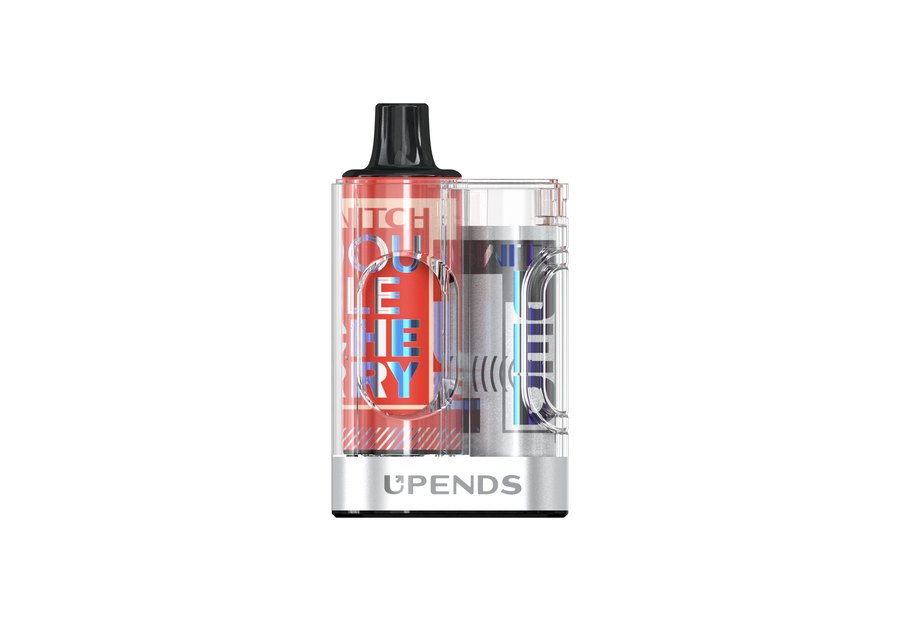
Flavor is the single biggest commercial decision in this category. In Europe it is now three decisions stacked on each other: what is legal in the country you are shipping to, what the consumer in that country actually buys, and — if you are stocking a dual-chamber device — which two flavors belong together in one body. Get the third one wrong and the first two stop mattering.
First, the legal filter
There is no EU-wide flavor ban, which is exactly why the market is confusing. The Tobacco Products Directive sets the ceiling across the bloc — 20 mg/ml nicotine, 2 ml for single-use devices, cartridges and tanks, 10 ml for refill containers — but flavor rules are set nationally. As of late 2026 the landscape looks like this:
| Restriction level | Markets | What is allowed |
|---|---|---|
| Tobacco flavor only | Netherlands, Slovenia, Hungary, Lithuania | No fruit, mint, candy, dessert or beverage profiles |
| Tobacco & menthol only | Denmark, Estonia, Latvia | Mint permitted; everything else restricted |
| Partial restrictions | Czech Republic, Germany (proposed) | Candy and dessert banned in CZ; menthol and cooling agents under review in DE |
| Open under TPD | Italy, Spain, Portugal, Austria, Greece, Romania, Bulgaria, Croatia, Slovakia | Full flavor range, subject to notification and labelling |
| Disposable hardware banned | UK (1 Jun 2025), Belgium (1 Jan 2025), France (25 Feb 2025); Ireland, Poland, Bulgaria approved or in progress | Rechargeable and refillable devices only — flavor range otherwise unchanged |
Two conclusions follow. First, in a tobacco-only market a dual-chamber device has nothing to sell — you cannot pair two flavors when only one is legal. The flavor-pairing model fits the open markets, the UK-style reusable pod category, and non-EU destinations. Second, the table above is a starting point, not a compliance document. National positions change faster than container cycles, and several markets are consulting on flavor naming and packaging even where the flavors themselves stay legal.
What actually sells in open markets
Nobody publishes reliable sell-through data for this category, so treat any ranking as directional. Across our own order mix and what distributors report back from open EU markets, the pattern is consistent:
- Fruit with an ice finish — blueberry, watermelon, apple, strawberry. This is the volume engine and the default first order.
- Standalone mint and menthol — the lowest-friction repeat purchase. Small basket, very high frequency.
- Beverage and soda — cola, energy, lemonade. Strong trial, reasonable repeat, works well in summer.
- Candy and gummy — excellent first-device conversion, weaker loyalty. The category regulators watch most closely.
- Tobacco — small and flat, but essential for smokers switching, and the only legal option in several markets.
- Dessert and bakery — polarising. Treat as a premium line, never a core SKU.
Why dual-chamber changes the flavor math
A single-flavor device carries one flavor. A dual-chamber device carries two in one SKU, and that has a structural effect on the shelf rather than a cosmetic one:
- Fewer SKUs, same coverage. A twelve-flavor range can be covered with six or seven dual-chamber devices, which cuts inventory and warehouse complexity for the distributor and the retailer.
- Built-in trial. The second chamber is a flavour the consumer did not choose but will try. That is how a range extends itself without extra marketing spend.
- Demonstrable at the counter. Shop staff can switch chambers in front of a customer. There is almost no other feature in this category that is that easy to show.
Pairing rules that work
Treat the two chambers as a structured pair, not two products sharing a case. Four rules cover most of it:
- Contrast, not similarity. Two berry flavors in one device is a waste of the mechanism — the consumer cannot tell the difference, so the feature disappears.
- One primary, one secondary. An asymmetric split is normal and tells the buyer which flavor is doing the volume work.
- Match the intensity. A very cold menthol will dominate the consumer's perception of a delicate fruit no matter how well the chambers are sealed. Pair strong with strong.
- Pair across occasions. The strongest pairs map to two moments in the day — the everyday flavor and the one that resets the palate.
| Positioning | Primary chamber | Secondary chamber | Why it works |
|---|---|---|---|
| Everyday workhorse | Fruit ice (blueberry, watermelon) | Mint or menthol | Highest-volume flavor plus a palate reset |
| Smoker transition | Tobacco | Mint or vanilla tobacco | Keeps a familiar anchor while adding novelty |
| Summer seasonal | Lemonade or citrus | Ice mint | Refreshment plus cooling, strong warm-weather trial |
| Beverage line | Cola or energy | Ice fruit | Familiar taste, high conversion at first purchase |
| Premium tier | Dessert (custard, vanilla) | Coffee or tobacco | Supports a higher price point and gift purchase |
Pairs to avoid
- Same family, two variants. Two berries, two colas, two custards — the customer sees one flavor and one wasted chamber.
- Arctic menthol with a delicate fruit. The cooling note overwhelms the fruit on the palate even when the reservoirs are perfectly isolated.
- Two heavy desserts. Flavor fatigue inside a single device; consumers report the second chamber going unused.
- Novelty profiles. High trial, near-zero repeat, and often the first thing a regulator questions.
The 2 ml question
The TPD caps single-use e-cigarettes, cartridges and tanks at 2 ml, so a compliant dual-chamber pod lands around 1 ml plus 1 ml. That is a short format, which pushes you toward high-impact, obviously different pairs — typically one fruit and one mint — rather than subtle variations. High-capacity dual-chamber formats belong to markets without the same cap. Build the pairing around the format you can actually sell, not the one that looks best on a spec sheet.
How to test a pairing before you commit
- Order the two flavors separately first. Confirm each one stands up on its own before you judge them together.
- Draw the full rated puff count. Note where flavor fades. A pair that only tastes good in the first 20% of the device is not a pair.
- Switch back and forth ten times. Count the puffs needed to clear. Two to three is normal for a genuine dual-chamber device.
- Run a small blind panel. Twenty to thirty adult vapers, no branding, one question: which chamber would you buy again?
- Then scale. A 3,000–5,000 unit mixed order validates the pairing commercially before a full container commitment.
Once a pairing is set, the same two flavors can be carried into OEM artwork and into the wholesale programme without changing the hardware. Our dual-chamber technology page covers the mechanism, the wholesale page lists MOQ and lead times, and the product range shows which dual-chamber models are in volume production.