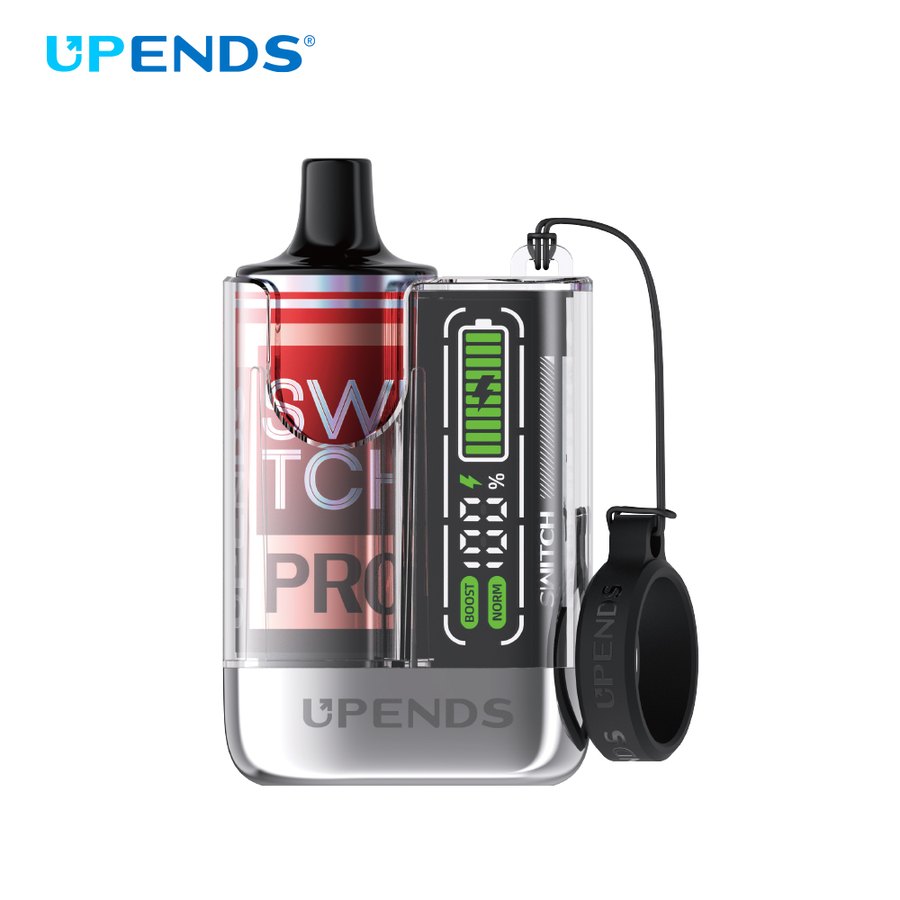
Selling vaping products into the UK and the EU looks like one compliance job. It is three. There is a filing route for Great Britain, a different one for each EU member state, and — since 2025 — a device-format rule that decides whether any of that paperwork matters. Distributors who treat all three as a single tick-box are the ones who end up with containers they cannot legally place.
This is a working comparison of the two notification routes as they stand in September 2026, with the deadlines that are actually moving.
The baseline is shared; almost nothing else is
The UK retained the EU's 2016 product rules when it left, through the Tobacco and Related Products Regulations 2016. That means the physical product standard is effectively identical on both sides of the Channel, which is convenient for a manufacturer and misleading for a distributor — because the product being the same makes it easy to assume the process is the same too.
| Product standard | UK (TRPR 2016) | EU (TPD 2014/40/EU) |
|---|---|---|
| Maximum nicotine strength | 20 mg/ml | 20 mg/ml |
| Refill container limit | 10 ml | 10 ml |
| Tank / pod capacity limit | 2 ml (nicotine-containing) | 2 ml (nicotine-containing) |
| Age of sale | 18+ | 18+ (varies nationally) |
| Notification required before sale | Yes — MHRA | Yes — per member state |
| Health warnings & labelling | Prescribed text and surface share | Prescribed text, national language(s) |
Everything below that last row is where the two routes diverge, and where your planning either holds or falls apart.
Route A — the UK: one filing, one register
The UK is the simpler route by a wide margin, and it is the one to model first if you are new to regulated markets. You notify the Medicines and Healthcare products Regulatory Agency once per product, the product is entered on a public register, and that single submission covers England, Scotland, Wales and Northern Ireland.
- One submission, one authority. No per-nation filing, no translation set, no portfolio of national portals.
- Per product, not per brand. Brand, flavour, strength and pack size each define a separate notification. This is where range breadth quietly becomes the biggest cost line.
- Lead time before launch. Notification is a pre-market obligation, so the clock starts well before your first shipment lands — not after. Build it into the order timeline rather than discovering it at customs.
- Technical file comes from the manufacturer. You file; the factory supplies the specification, e-liquid composition, emissions and toxicological testing, safety data sheets and battery transport documentation.
Three UK changes in the second half of 2026
These are live and dateable, and each one touches landed cost or route to market rather than the product itself:
| Date | Change | Commercial effect |
|---|---|---|
| 1 October 2026 | Vaping Products Duty starts at £2.20 per 10 ml of e-liquid | Applies to nicotine-free liquid as well as nicotine. Duty stamps and revised pricing systems required. This is a margin event, not a product event. |
| 29 October 2026 | Age-of-sale rules extended to all vaping and nicotine products; free distribution restricted; promotional discounts and coupons restricted; vending machines prohibited | Affects sampling programmes, promotional pricing and unattended retail. Rework any trade promotion before it goes live. |
| Consultation closed 2 October 2026 | Consultation on packaging, appearance, flavour naming and point-of-sale display under the Tobacco and Vapes Act 2026 | Not law yet — the Act creates powers that need secondary legislation. Treat the direction of travel as confirmed and artwork as provisional. |
Two things worth saying plainly about the UK. First, the Tobacco and Vapes Act 2026 received Royal Assent on 29 April 2026, but most of what it sets up is enabling power: the day-to-day rules have not changed yet, and the government has indicated staged implementation. Second, the generational tobacco ban that starts on 1 January 2027 applies to tobacco. It does not ban vaping products for that cohort.
The UK rule that actually decides your range
Since 1 June 2025, the sale and supply of single-use vapes is prohibited across England, Scotland, Wales and Northern Ireland — and the ban covers nicotine-free devices too. A device remains lawful only if it is rechargeable, refillable and fitted with a replaceable pod or coil. Everything else in this article is paperwork. This one is a gate.
Route B — the EU: 27 filings, not one
The EU looks like one market and files like twenty-seven. Article 20 of the Tobacco Products Directive makes notification a national obligation: you submit to the competent authority of each member state where you intend to place the product on the market. In practice that means separate portals, separate per-product fees, separate language requirements and, in several countries, a required lead time before your launch date.
There is no consolidated European submission, and no EU-wide approval that a distributor can point to. A product notified in Germany is not notified in France. Budget the filing effort per country and sequence your market entry accordingly — one or two markets done properly beats ten started badly.
Where the EU is heading, and where it is not yet
An EU-wide flavour ban and an EU-wide disposable ban are frequently reported as imminent. As of September 2026, neither exists in law. The revision process — informally TPD3 — ran a public consultation that closed on 14 August 2026, following the Commission's April 2026 evaluation of the existing framework. The indicative timetable for a legislative proposal is December 2026, and timing remains subject to change. Flavours, disposables, nicotine pouches, nicotine-free e-cigarettes, packaging and digital marketing are all in scope for policy options.
What that means operationally: plan against the rules that exist today, and treat the EU revision as a medium-term reason to hold flexible artwork and flexible formulations. A product range that can be renamed and repackaged at short notice is worth more than a forecast.
National divergence is already the real constraint
Because member states can act nationally on public health and environmental grounds, the practical map looks nothing like a single market. Status as at September 2026, to be confirmed per market before ordering:
| Position | Markets | What it means for a range |
|---|---|---|
| Single-use sales banned | Belgium, France (EU); UK (outside the EU) | Sealed devices out; rechargeable replaceable-pod formats only |
| Ban approved or in progress | Bulgaria, Austria, Ireland, Poland, Spain | Assume the ban arrives within your inventory cycle |
| Flavour restricted to tobacco (and in some cases menthol) | Netherlands, Denmark, Lithuania, Latvia, Slovenia | Fruit and dessert profiles are unlistable regardless of device format |
| Legal under standard TPD, taxed heavily | Italy, Portugal | Format legal; excise per ml materially changes retail price points |
| No sales ban, recycling obligations | Germany | Retail collection duties apply; product range otherwise open |
| Reclassified, licensed retail only | Austria | Route to market changes more than the product does |
The deadline most buyers have not priced: 18 February 2027
This is the item we raise with every European buyer, because it is EU-wide, it is dated, and it is not a vape regulation at all. The EU Battery Regulation (EU) 2023/1542 requires portable batteries to be removable and replaceable by the end user, and that requirement applies from 18 February 2027.
A classic disposable has a lithium cell soldered into a sealed chassis. It cannot meet that requirement, and no notification, licence or national permission changes it. The consequence is that the sealed single-use device becomes effectively unplaceable across all 27 member states on that date — including in member states that have never introduced a disposable ban.
For a distributor, that reframes the question. It is no longer “which markets still allow disposables?” but “what does my range look like after February 2027, and can I get there without writing off this year's inventory?”
UK and EU side by side
| UK | EU | |
|---|---|---|
| Authority | MHRA — single authority | Competent authority per member state |
| Filings required | One per product | One per product per country |
| Language | English | National language(s) |
| Fees | Single fee schedule | Per-country fees, set nationally |
| Lead time before launch | Set pre-market period | Varies by authority; some require advance notice |
| Single-use device | Banned since 1 June 2025 | Fragmented now; effectively excluded from 18 February 2027 by battery rules |
| Tax layer | Vaping Products Duty from 1 October 2026 | National excise, divergent and under revision |
| Who files | Importer / distributor | Importer / distributor |
What survives — and why format beats flavour
Read the two routes together and a shape appears. Across the UK and most of the EU, the format that stays lawful is rechargeable, refillable, with a replaceable pod or coil. Flavour rules are the volatile variable; device format is the settled one. Build the range on format and treat flavour as a localised layer you can re-cut per market.
A useful side effect: dual-chamber flavour separation is a function, not a device category. Two sealed reservoirs and a switching valve describe how flavour is separated, not whether the cell is soldered in. That technology transplants straight into a rechargeable chassis with a replaceable prefilled pod — which is exactly where compliant European demand is heading, and why the dual-chamber story survives the disposable crackdown intact.
Pre-order checklist
- Confirm whether your device is single-use by the destination's definition, not by your packaging.
- Confirm the current national position in every country you intend to sell into — not the EU average.
- Count your notifications honestly: flavours × strengths × pack sizes × countries.
- Request the full technical file and check the test reports are current and match the SKU.
- Book notification timing before you place the production order, not after.
- Check whether your format clears the 18 February 2027 battery requirement.
- Price the UK duty into your margin if you sell into Great Britain.
- Review trade promotions against the UK's October 2026 restrictions on discounts, coupons and free distribution.
- Keep artwork and flavour naming flexible — both are in active review on both sides.
- Get the compliance division of labour in writing: manufacturer supplies the file, you make the filing.
Our EU compliance checklist covers the document set line by line, and the wholesale page lists the pod and prefilled formats we supply for markets where single-use devices are no longer an option. If you are re-planning a European range around the February 2027 battery deadline, send us your target markets and current SKU list and we will map it against the format that clears them.