Almost every first wholesale enquiry arrives with the same two questions: what is your MOQ, and how many units should I actually take? The first has a precise answer. The second is the one that decides whether the order makes money, and it is the one buyers most often get wrong — usually by ordering too wide instead of too deep.
MOQ is a ladder, not a number
There is no single minimum order quantity in this category, because the minimum is set by the production step you are asking the factory to start. Selling you stock that already exists costs the factory almost nothing to prepare. Mixing a bespoke e-liquid and printing your own box means stopping a line and running a setup. Each of those steps has its own floor, so the MOQ climbs as you move up the ladder:
| Supply model | Typical MOQ | What you control | Typical lead time |
|---|---|---|---|
| Sample order | 5–100 units | Nothing — you are inspecting | 3–5 working days |
| Catalogue stock, no customisation | 50–500 units | Model and flavour selection | 3–15 days |
| Private label (existing device, your packaging) | 1,000–3,000 units | Box artwork, logo, sometimes flavour mix | 15–30 days |
| ODM (factory platform, your brand) | 2,000–5,000 units | Branding, packaging, limited spec changes | 20–45 days |
| OEM (custom device and packaging) | 3,000–10,000+ units | Mould, battery spec, airflow, coil, full design | 30–60 days |
Read that table as a map of the market, not as a menu. The low-MOQ rows are how small retail chains and market testers buy. The high-MOQ rows are how a distributor builds a brand it owns. Neither is better; they answer different questions. What matters is that you know which rung you are standing on, because the price per unit and the cash you commit move together.
What actually drives the number up
Buyers sometimes assume the MOQ is a negotiating position that a softer conversation will move. It usually is not. Four physical and economic constraints sit behind the number:
- E-liquid batch minimums. Nicotine solution is mixed in a tank of fixed volume. Run it half full and the nicotine concentration and flavour profile start to drift, which is a compliance problem as well as a quality one. The batch size sets a floor on how few units can be filled.
- Printing plates and dies. Your retail box needs a plate. That cost is fixed whether you print 2,000 boxes or 200,000, so a short run pushes the per-box cost up sharply. The same logic applies to custom device printing and to any bespoke insert.
- Line changeover. A production line running a catalogue model can be switched to your SKU, but only if the volume justifies interrupting other work. Below a certain quantity the factory loses money on the changeover itself.
- Per-SKU compliance. In regulated markets each variant is normally its own SKU with its own notification, labelling and documentation. Ten flavours at 20 mg/ml is not one product, it is ten. Breadth multiplies paperwork and testing cost far faster than depth does.
That last point is the one first-time buyers underestimate most. It is also the reason the next section matters more than the MOQ table.
Sizing the first order: three numbers
You do not need a financial model. You need three numbers, and you probably already know two of them.
- Weekly sell-through. How many units per week can you realistically move through the accounts you already have — not the accounts you hope to sign. Be conservative; this is the number that protects you.
- Weeks of cover you want to carry. For a first order, six to ten weeks is a sensible band. Below six you risk stocking out before the next shipment lands. Above ten your cash is parked in a warehouse.
- Landed cost per unit. Ex-works price plus freight, insurance, duties and clearing — on one Incoterm you have actually agreed, not a mix of two.
Multiply the first two and you have your order quantity. Then check it against the ladder above. If the honest answer lands below the MOQ for the model you want, you have a choice to make, and it is a commercial choice rather than a technical one:
| Weekly sell-through | 8 weeks of cover | What that means |
|---|---|---|
| 120 units | 960 units | Below catalogue MOQ for most programmes — start with samples and a small mixed order, or pool with a partner |
| 400 units | 3,200 units | Fits a catalogue programme comfortably; keep the range narrow |
| 900 units | 7,200 units | Comfortably funds private label and covers the setup costs |
| 2,000 units | 16,000 units | A full OEM programme becomes the better value route than buying stock |
Note what the second column does to the third. The right supply model is a function of your velocity, not of your budget or your ambition. A buyer moving 120 units a week who commits to an OEM run because the unit price looked attractive has bought a warehouse problem, not a margin.
The mistake almost every first order makes
The classic first order is ten flavours at 300 units each. It feels like a sensible hedge — something for every customer — but it usually fails for three reasons:
- It is thin everywhere. You cannot tell which flavours actually sell, because nothing ever stocks out and nothing ever runs deep enough to reorder.
- It multiplies your compliance cost. Ten variant SKUs means ten notifications, ten label sets, ten sets of documentation. In a regulated market that overhead can exceed the product cost differential.
- It hides your own data. The point of a first order is to generate sell-through information. A narrow order produces a clear signal; a wide one produces noise.
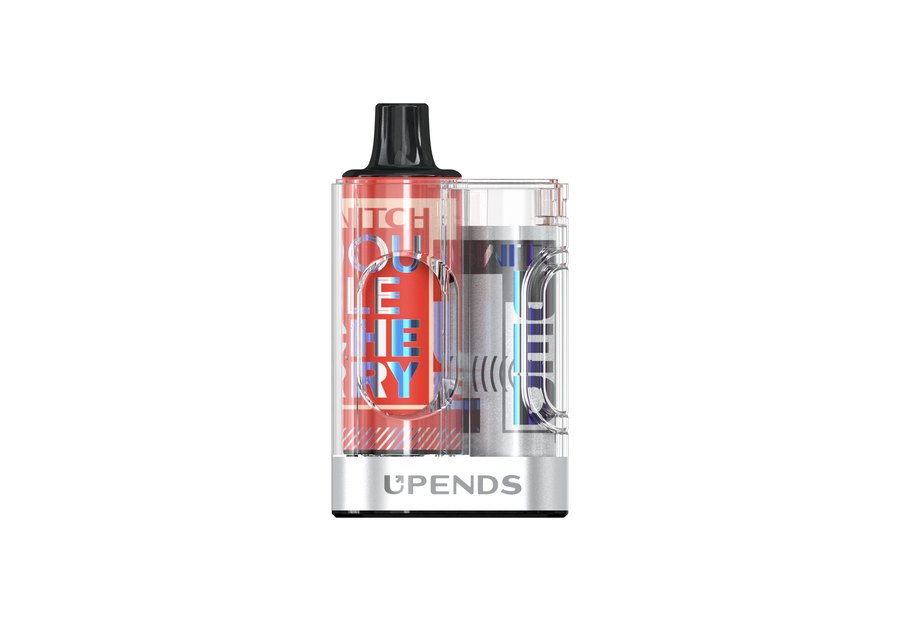
The better shape is three to five flavours, chosen with some reasoning behind them — typically one fruit with an ice finish, one mint, one beverage, plus one familiar tobacco anchor for switchers. Go deeper on those, watch what moves, and expand the range on the second order once you have four to six weeks of real data. If you are pairing flavours inside a dual-chamber device, the same discipline applies to which two flavours share a body; we cover the pairing logic in our guide to flavours that sell in the EU.
Five legitimate ways to lower the MOQ you face
You can reduce the minimum without asking anyone to bend a rule. These are the levers that actually work:
- Order catalogue models instead of custom ones. Ready stock carries the lowest floor and the shortest lead time, because the factory already absorbed the tooling and batch risk.
- Combine models in one order. Many programmes — ours included — let you reach the minimum across a mixed selection rather than committing to one SKU. That is how you get breadth without paying for it.
- Keep the device, change only the packaging. A hybrid — proven hardware plus your box artwork — sits well below full OEM and is usually the right first step for a new brand.
- Phase the order. Agree the full programme, ship it in two or three releases against a rolling forecast. You still get programme pricing without holding all the inventory at once.
- Use LCL rather than a full container. A complete container is not the minimum order; it is the cheapest way to ship one. A pallet or LCL shipment lets you test a market at a fraction of the commitment.
What our own programme looks like
So you can compare against the table above: catalogue models start at 3,000 units per flavour, and mixed models may be combined within a single order to reach it. Private label and OEM programmes start at 5,000 units per SKU and include device marking, retail box artwork, the user manual and market-specific documentation. Sample orders of 5–10 units are dispatched within five working days at sample pricing, courier cost at the buyer's account. Typical production lead time is around 25 days. The full terms are on the wholesale page.
One caution on price: a quote is only comparable on the same Incoterm. An ex-works price that looks 15% cheaper than a DDP price is not cheaper, it is a different offer. Ask every supplier to quote on one Incoterm you nominate, and make sure freight, insurance, duty and clearing are all inside it before you compare. We cover the rest of the sourcing process in how to source disposable vapes wholesale from China.
Payment terms and cash flow
The MOQ is only half the cash question; the payment schedule is the other half. The standard structure on a first order is 30% deposit with the balance against a copy of the bill of lading or before dispatch. Larger or repeat orders often move to 30/70 with the balance at 30 days, and first-time orders with significant value can be wrapped in a letter of credit where both sides want bank protection.
Two practical points. First, a deposit is what actually starts production, so the date you pay is the date your lead time begins — plan backwards from your desired delivery, not forwards from the order. Second, keep the intellectual property in mind: agree in writing who owns the mould, the artwork and the flavour formulation before the first payment, because those questions are much harder to settle after the goods exist.
A 30-day plan for a first order
- Days 1–3 — define the market. Confirm what the destination country permits and what documentation it requires. Every later decision depends on this one.
- Days 3–8 — request samples. Ask for the specific models you are considering, not a generic kit, and state your target market so the correct spec is sent.
- Days 8–18 — test properly. Draw the full rated puff count, check leakage and charging behaviour, and record where performance fades.
- Days 18–22 — compare on one Incoterm. Line up landed cost per unit, MOQ and lead time side by side, all on the same terms.
- Days 22–25 — fix the range. Three to five flavours, with the reasoning written down. Narrow beats wide.
- Days 25–30 — place the order. Confirm the proforma invoice, the deposit percentage, the payment channel and the documentation pack before you transfer anything.
If you would rather start from a specification sheet than from a blank page, send us your target market and expected monthly volume and we will come back with the model, the MOQ and a landed cost estimate.